


See what AI costs you, cut it, and keep it under control.
Bring AI spend, governance and value under control
AI is one of the fastest-growing costs in IT and often one of the least governed. Models, agents, copilots, and embedded AI tools are bought across different teams, contracts, and invoices, with no clear view of total spend, ownership, or value. Livingstone brings this together through four connected services covering governance, license management, token and consumption costs, and business case development.

Strengthen AI Governance and reduce risk AI Governance & Policy Assessment

Discover what AI really costs you - Get 20-35% of you AI spend back AI License Management Tokenomics
AI License Management tokenomics baselines AI usage and spend across your entire estate, including the AI embedded in tools you already pay for.
Analyze billing, license, consumption, and usage data to expose shadow AI, cost leakage, and contract risk.
Receive a complete AI inventory, consumption baseline and forecast, entitlement reconciliation, risk-rated shadow AI register, maturity score, and quantified cost-saving plan.

Stay in control as AI scales AI Managed Service - Tokenomics

Demonstrate AI value AI Business Use Case Development
Book the one-day Strategy Workshop. It baselines your cloud and AI costs, prioritizes 20- 30 use cases, and produces an executive roadmap.
FAQs
What is AI tokenomics?
AI tokenomics is the practice of understanding, managing, and optimizing the consumption-based costs of enterprise AI. It examines what drives AI spend – tokens, API calls, models, agents, users, and workloads – and connects that consumption to business value.
Effective AI tokenomics helps organizations identify which AI services and use cases are driving costs, forecast future consumption, and find opportunities to reduce waste. This can include selecting more cost-effective models, improving how applications consume tokens, removing unused services, and introducing controls for high-cost or low-value usage.
How do we know which AI tools are already in use?
Building an accurate AI inventory requires looking beyond centrally approved software, as AI can be purchased and deployed through many different channels. Organizations should examine procurement records, contracts, expense claims, cloud platforms, SaaS applications, browser-based tools, departmental purchases, and existing software products with embedded AI functionality.
This can reveal both approved AI and shadow AI tools or services being used outside established IT, procurement, or governance processes. The resulting inventory should identify what AI is being used, who owns it, how it is paid for, what data it accesses, and whether its use creates cost, security, compliance, or contractual risk.
Will AI governance slow down adoption?
Good AI governance should enable responsible AI adoption rather than slow it down. Clear policies, ownership, approval routes, and risk controls help employees understand which AI tools they can use, what data they can use with them, and when additional review is required.
Without these guardrails, organizations can end up responding reactively to shadow AI, security concerns, unexpected costs, and regulatory risk. A proportionate governance framework allows lower-risk AI use cases to move quickly while applying greater scrutiny to higher-risk applications.
What does an AI governance review include?
An AI governance review assesses how effectively an organization identifies, approves, manages, and monitors AI across the business. It should cover areas such as AI inventory and ownership, policies, data use, procurement, security, risk management, regulatory requirements, cost control, decision-making, and accountability.
A review identifies gaps between current practices and the organization’s required governance framework, prioritizes risks, and defines practical remediation actions. Livingstone’s AI Governance & Policy Assessment evaluates policies, controls, and evidence across eight governance dimensions and maps the assessment to ISO/IEC 42001 and ISO/IEC 27001.
Can you help us build the business case for AI?
Yes. A strong AI business case should assess a proposed use case against expected business value, implementation and ongoing costs, technical feasibility, risk, adoption requirements, and measurable outcomes.
Livingstone’s AI Business Use Case Development service helps organizations identify and prioritize potential AI opportunities rather than investing in AI without a clear value case. The process considers existing cloud and AI costs, evaluates potential use cases, and creates an executive roadmap for implementation and investment decisions.
What happens after Livingstone’s initial AI assessment?
After the initial AI assessment, organizations receive a prioritized view of the actions needed to reduce costs, close governance gaps, and improve control over AI usage. Depending on the findings, organizations can implement these actions internally, address them through a targeted optimization program, or manage them through an ongoing AI cost and governance service.
Continuous management can then monitor AI usage, licenses, token consumption, and spend as adoption grows, helping prevent cost leakage and governance gaps from reappearing. Livingstone’s managed AI tokenomics service provides ongoing monitoring, controls, and optimization rather than treating AI cost management as a one-off exercise.
Related Articles
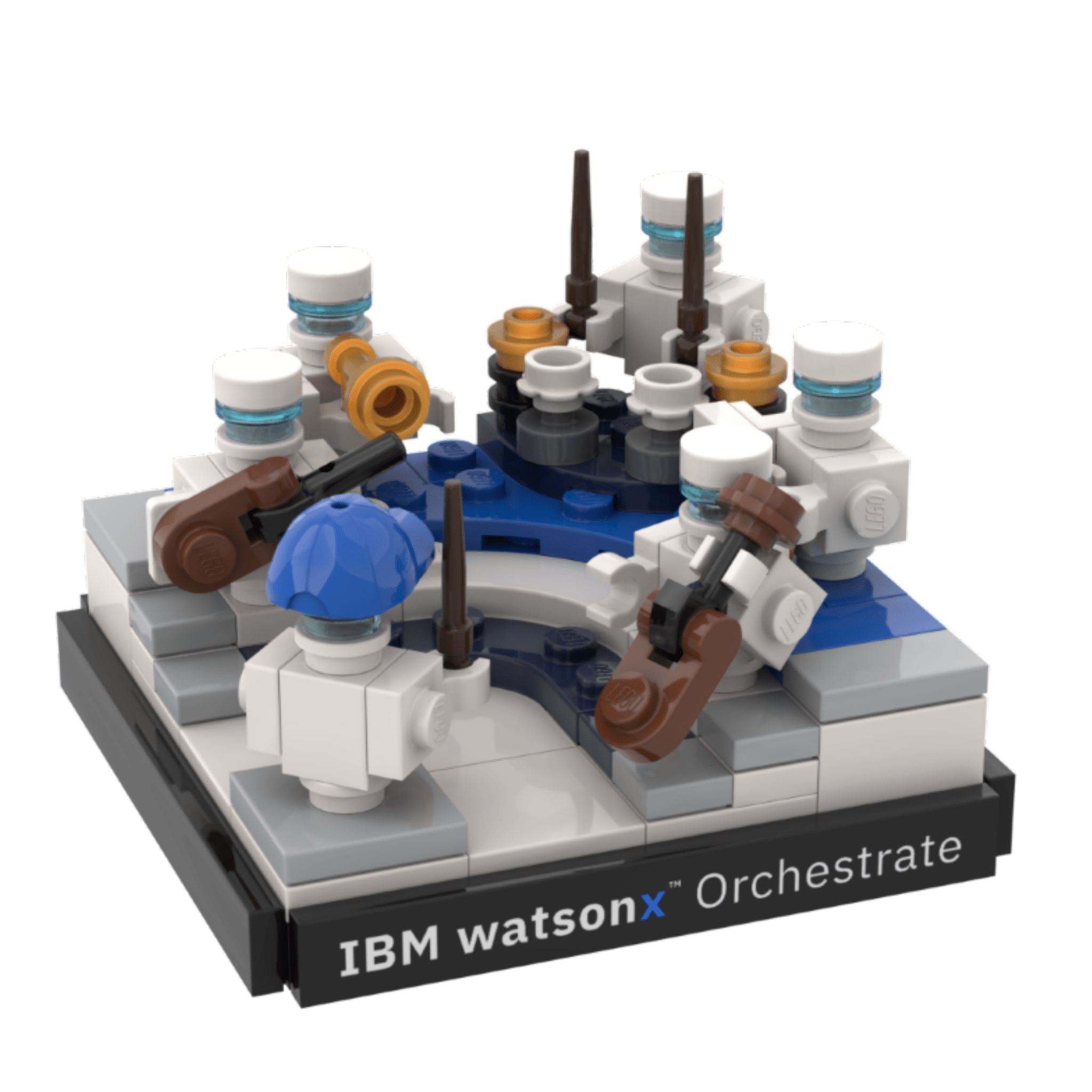
AI agents can drive productivity, but they also create new questions around usage, ownership and cost control. Try BOB, a live IBM watsonx Orchestrate deployment with four specialist agents, and see how multi-agent AI works in practice before scaling it across your organization.
Enforcement of the AI Act began on 2 August. Here is your starting point.
This is a practical starting point for organizations that buy and deploy AI rather than build it and an argument that the first move is an asset management job, not a legal one.
The $500 million AI bill that was never an AI problem
Wasted software spend is still a real issue despite optimization efforts. The thing is, it's not really the fault of your SAM or procurement teams. It's complicated. This blog explores the challenge and what organizations can do about it